
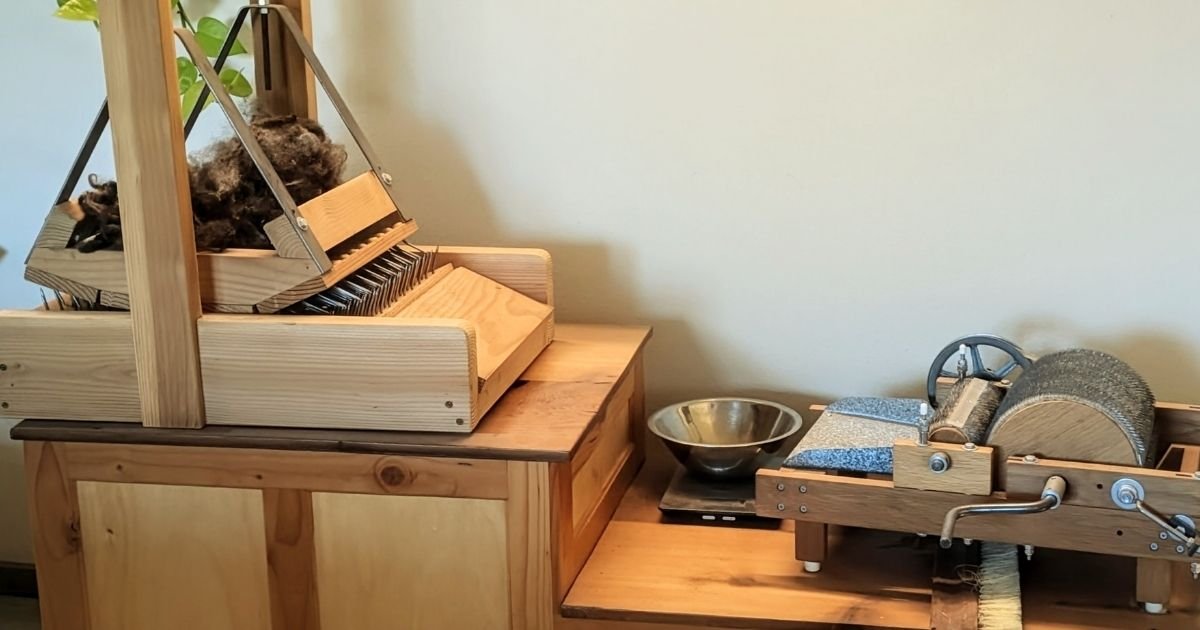
A DIY Swing Picker for Wool Prep + Free plans to build your own
Spinning wool into yarn involves more prep than most people realize.
Before you get to carding or spinning, raw wool locks need to be opened up so the fibers aren’t compacted, and dirt and debris (known as VM in the fiber world) need to be removed.
That early prep step is where I used to spend most of my time.
After washing our wool, I’d sit with piles of fleece and open the locks by hand. Our sheep tend to have a bit of VM and dirty tips — normal for pasture-raised animals — and those ends can be tight and slow to separate. I could get through it, but it was tedious and took a long time to prep enough wool to move on to the next step. At some point, it became clear that what I needed wasn’t more patience — it was a better tool.
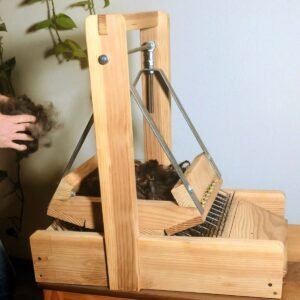
Enter The Swing Picker
A swing picker is a tool used before carding to open up wool.
Its job is to separate compacted locks, loosen the fibers, and help remove some of the remaining debris and vegetable matter that didn’t come out during washing. Once the wool is opened up, carding is easier and more consistent, and the fiber moves through the rest of the process with much less resistance. We only have twelve sheep, but even at that scale, shearing time leaves me with more wool than I know what to do with. Once I saw how much fleece was piling up — and how long it was taking me to open it all by hand — it became clear that I needed a picker.
I spent some time looking at different types of pickers, including box pickers. Box pickers work by pushing wool through a fixed set of teeth, and they can be effective, especially for smaller batches. But they tend to be slower and require more hands-on effort.
A swing picker uses motion to do more of the work. The swinging action helps open the locks more quickly and evenly, which made it a better fit for the amount of wool we’re processing.
We looked at buying a swing picker first. There are good commercial options available, but they’re expensive, especially if you’re processing wool on a small farm scale, so we decided to build one instead. My husband sketched out a design and adjusted it as he went, making notes and small changes until it worked the way we needed it to.
How we use it
After the wool is washed and fully dry, I load small amounts into the picker and work the fiber through using a steady swinging motion. That motion is what does most of the work.
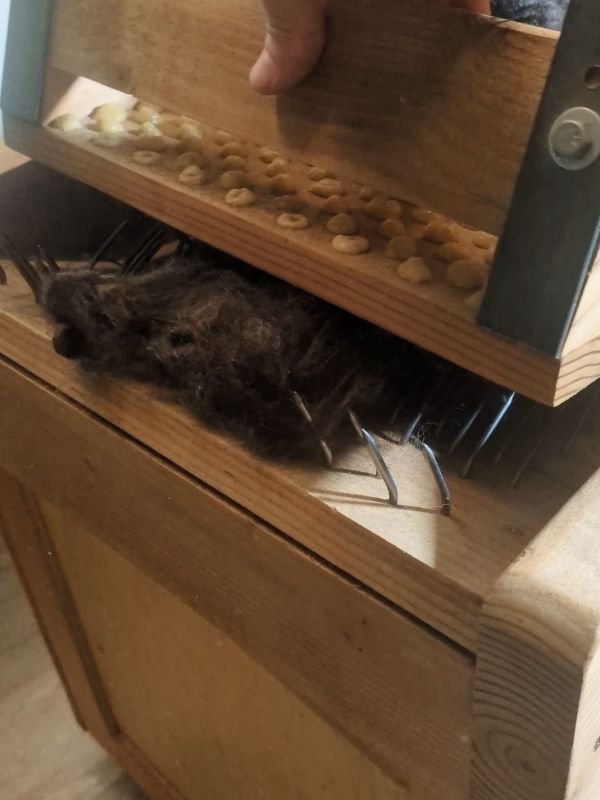
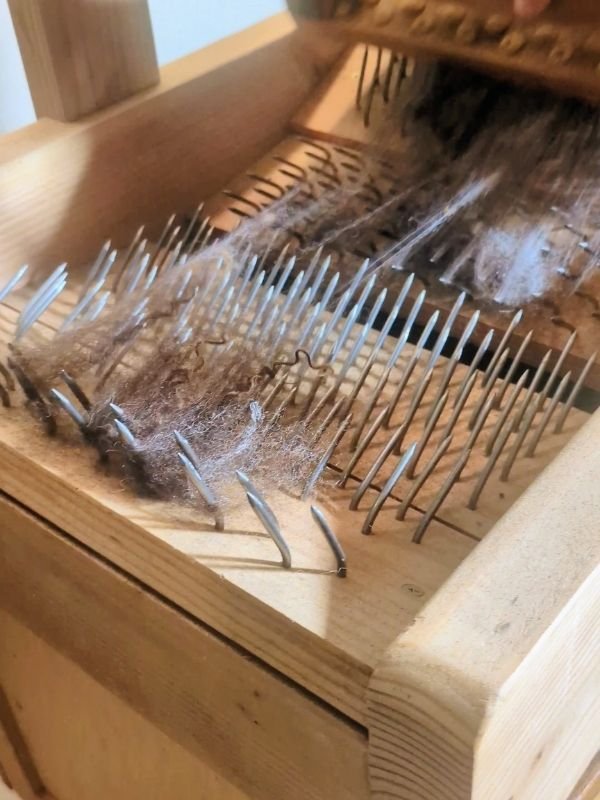
The picker itself is built with rows of nails that were sharpened and bent slightly. When wool is fed in from one direction and the arm swings, those teeth catch the locks, pull them apart, and help move the fiber through the picker and out the other side.
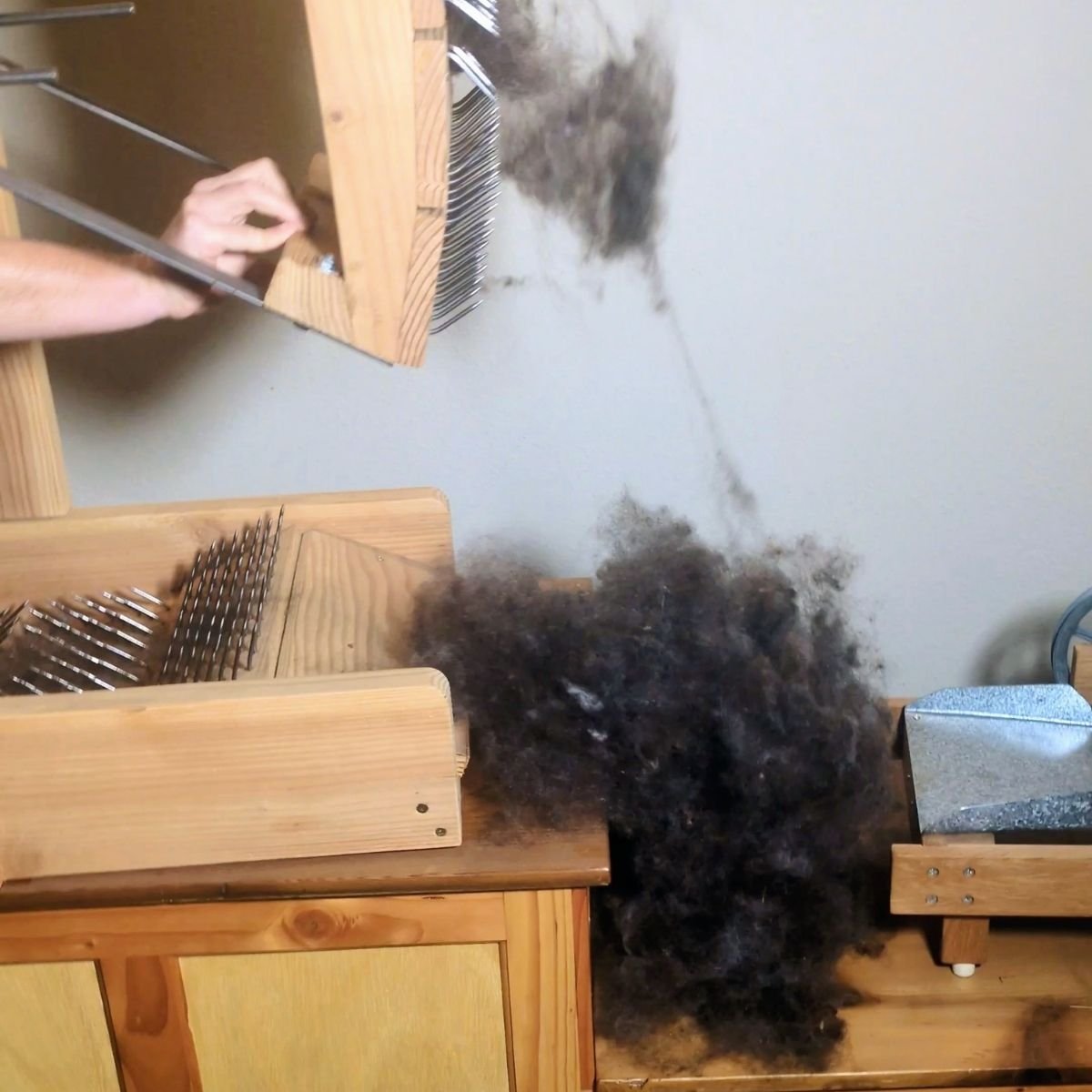
What comes out the other end is still raw wool — not ready to spin and not perfectly uniform — but it’s open, fluffy, and much easier to work with.
The picker doesn’t remove everything, and it isn’t meant to. There will always be some debris left, especially with pasture-raised sheep. The difference is that once the fiber is opened, the remaining prep (carding in our case) is faster and easier.
As with any tool that uses sharp teeth, it’s important to work carefully. I wouldn’t want to get my hand stuck in there!
was it worth building?
Absolutely. It’s been a huge time saver, my hands and shoulders don’t get as fatigued, and wool prep no longer feels like such a bottleneck in the yarn-making process.
Carding is also more efficient, since the fiber going in is already opened instead of compacted and resistant.
Overall, it made wool processing more manageable and easier to fit into my schedule. But a tool like this isn’t the right solution for everyone — especially when building it yourself is part of the equation.
That’s where it helps to be clear about who this kind of picker is actually suited for.
Who This Tool — and These Plans — Are For
This type of swing picker makes sense if:
- you’re processing your own wool on a small farm or homestead
- you have enough fleece volume that hand-picking is slowing you down
- you’re comfortable building tools from plans and using basic shop tools
It may not be a good fit if:
- you’re new to woodworking or shop safety
- you only process very small amounts of wool occasionally
- you’re looking for a finished, production-scale machine (I’d still recommend buying a picker in that case!)
about the plans
After sharing a reel of our swing picker, we started getting messages asking if we had plans for it. We didn’t originally set out to make any — but since so many people were curious, we decided to gather up our notes and measurements and share them.
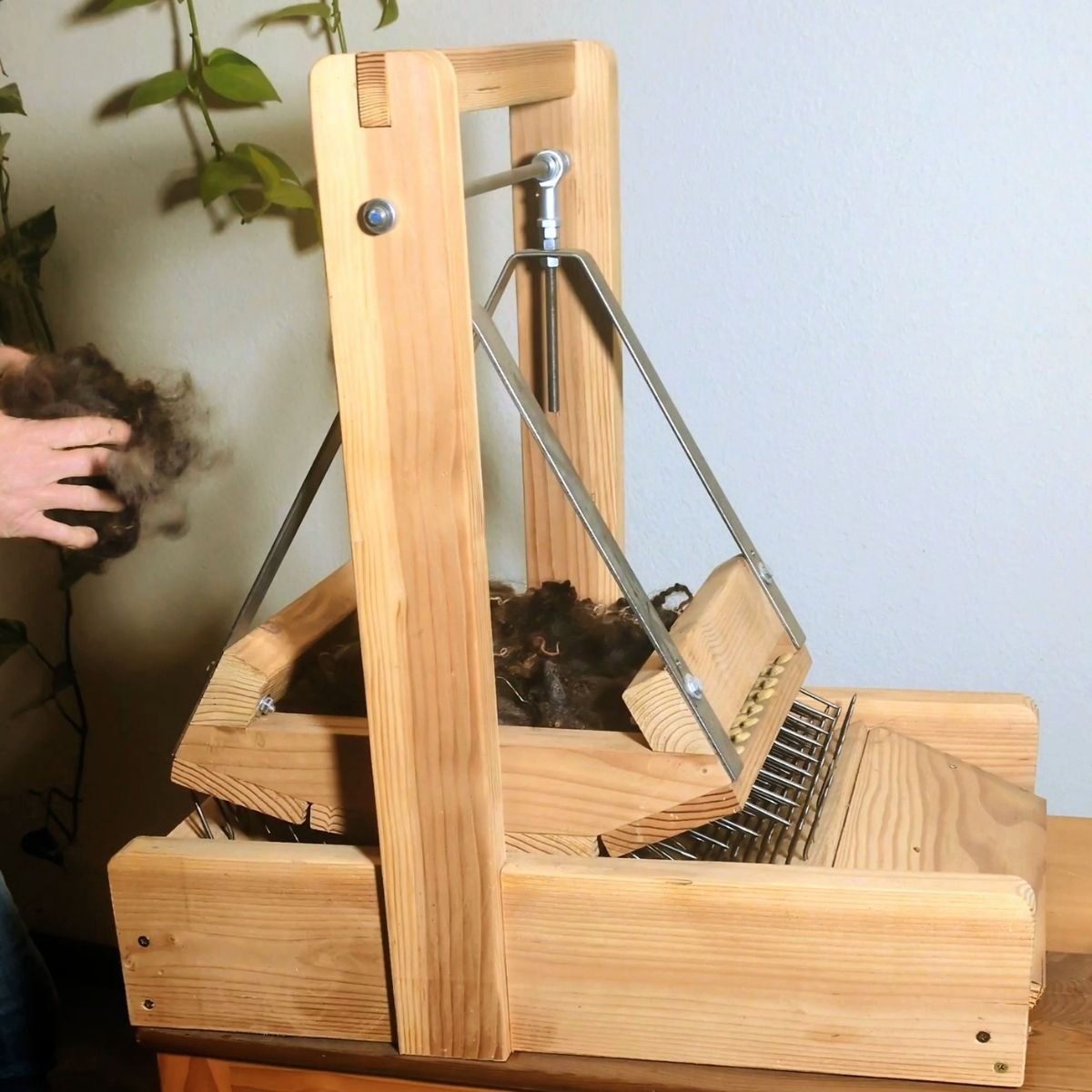
Want the Swing Picker Plans?
If you’d like the build plans for our swing picker, you can sign up below and I’ll send them straight to your inbox. Free for personal use
Hi,
Thank you for your shearing. I do wonder what do you think about using wool for house walls like insulation for making them warm.
I am all in to the wool. From socks to heats and beddings
Thanks
I know that there are some companies out there that make wool insulation for houses, and it seems like an eco friendly alternative to synthetic material to me! I’m currently doing an experiment overwintering dahlia tubers in wool and it is remarkable how insulating it is!
Hello, Little question on the wool picker. What king of nails are you using? Where did you buy it from? Thank you.
Hi Julie, Thanks for your question! We used 8 penny common bright nails and sourced them at Home Depot (at the time.) Hope that helps!
Downloaded plans. Thank you! 💕
You are very welcome!