Wool → Yarn → Cloth Series Part 1
Planning the palette
Every weaving starts with a plan — even if it’s a loose one.
For this piece, the idea was simple:
I wanted to see if I could create a fabric that hinted at a leopard print — not literal spots, but that warm, organic mix of light and dark that feels familiar without being obvious.
That idea guided every choice that came next.
Choosing the Colors
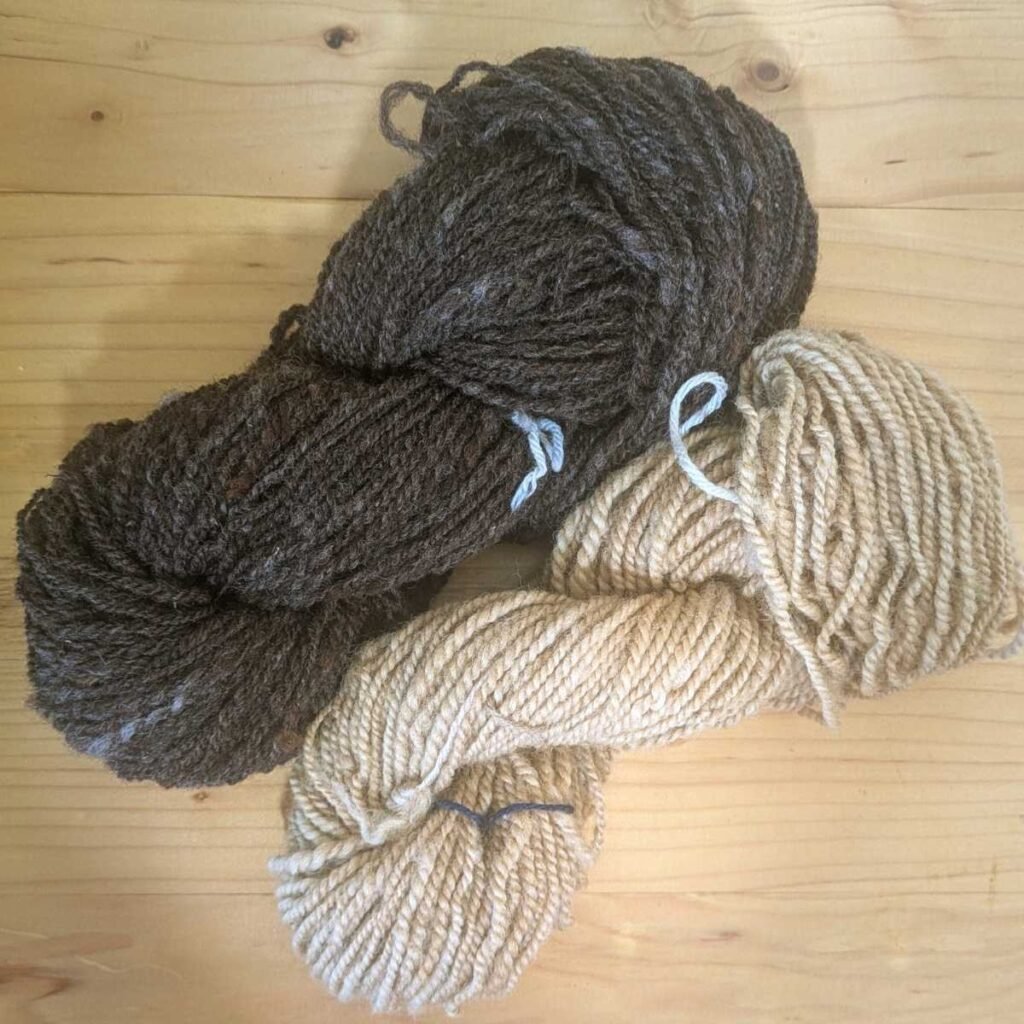
I looked through my stash for inspiration and decided that, to get the lighter tone, I would dye yarn using coffee. I love using coffee as a dye because it’s so easy and creates a beautiful, soft, warm caramel brown on white wool.
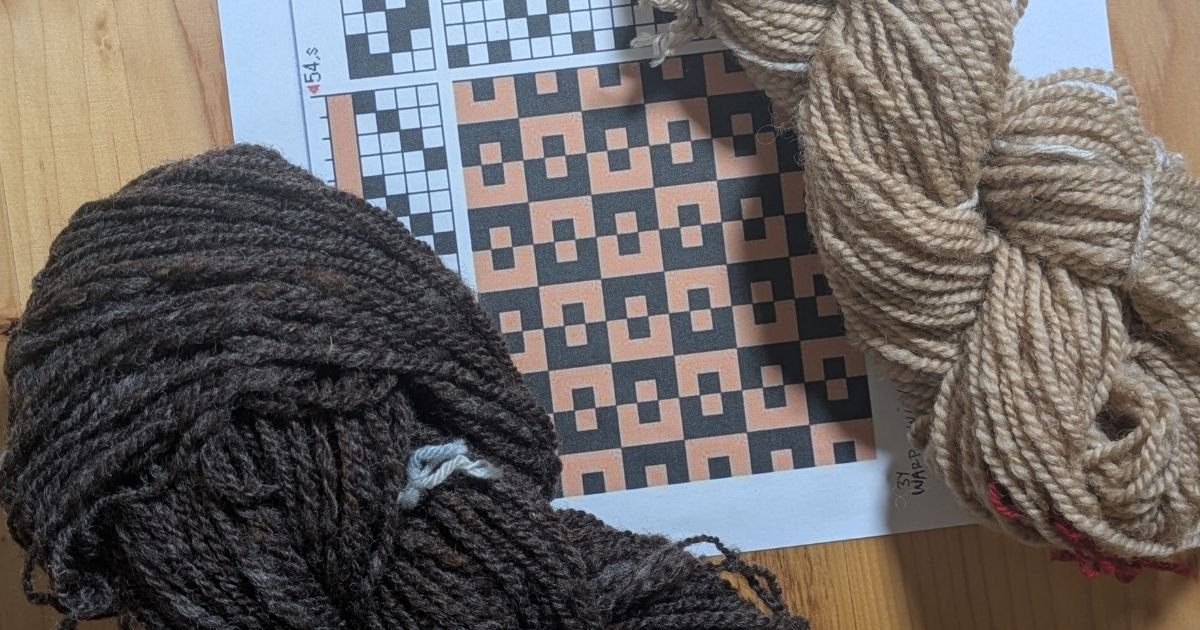
For the darker color, I went in a completely different direction. I used wool from our darkest colored sheep and spun it without dyeing it at all. The color is deep and rich on its own, and I wanted as much contrast as possible to get that leopard energy.
Side by side, the two yarns felt like they belonged together — light and dark, textured, subtle but hopefully high enough contrast.
Intention Before Technique
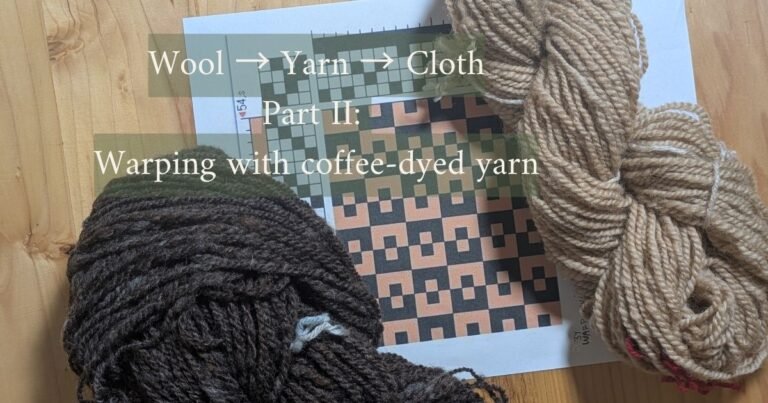
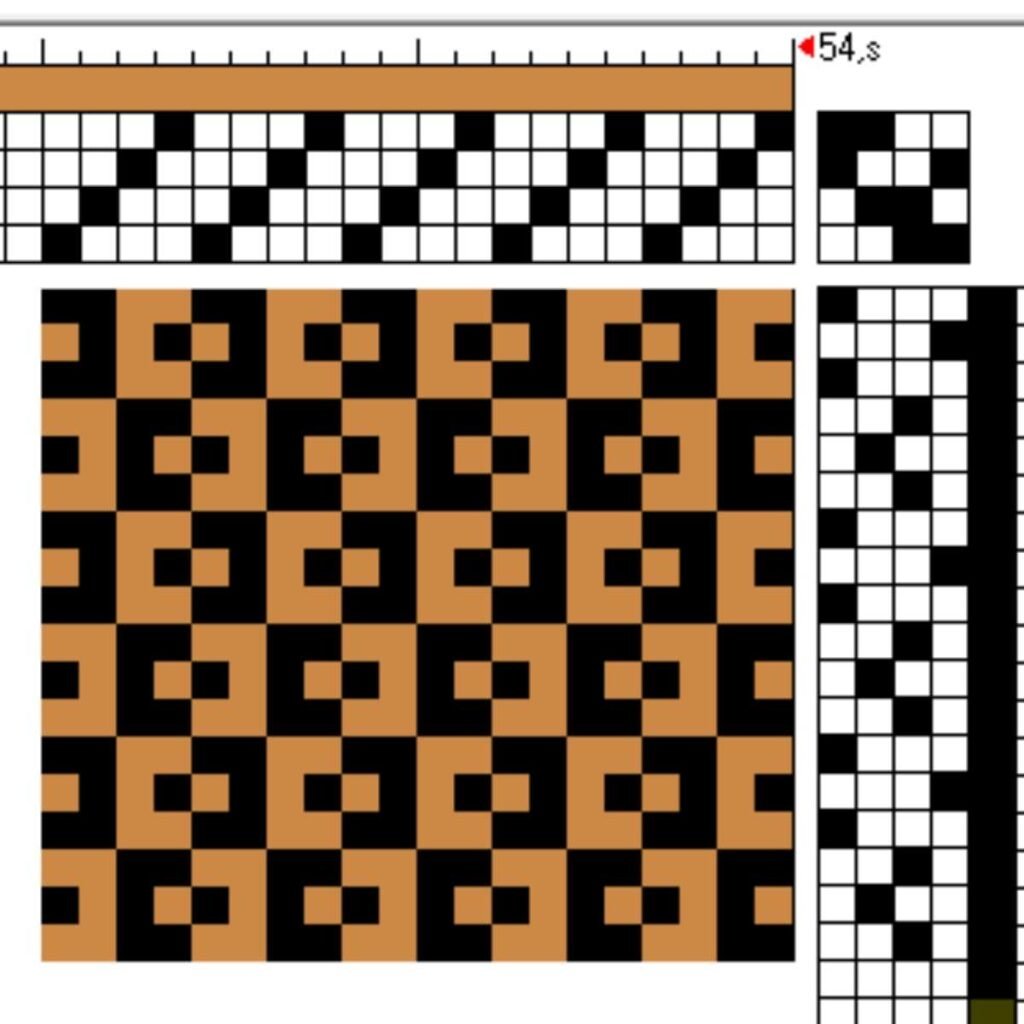
At this stage, I’m not thinking much about weaving structure or final measurements. But I do need some kind of pattern (called a draft in weaving). I chose this one because I sampled it in another project and thought it might work for my leopard print experiment. I use a program called Fiberworks, which lets you add colors to the pattern to visualize what it might look like in the finished cloth. At this stage, I’m thinking about how these yarns will interact once they’re under tension — how the colors might break up, blur, or surprise me once they’re woven together.
That’s what this first step is about: setting an intention and choosing materials that support it.
What Comes Next
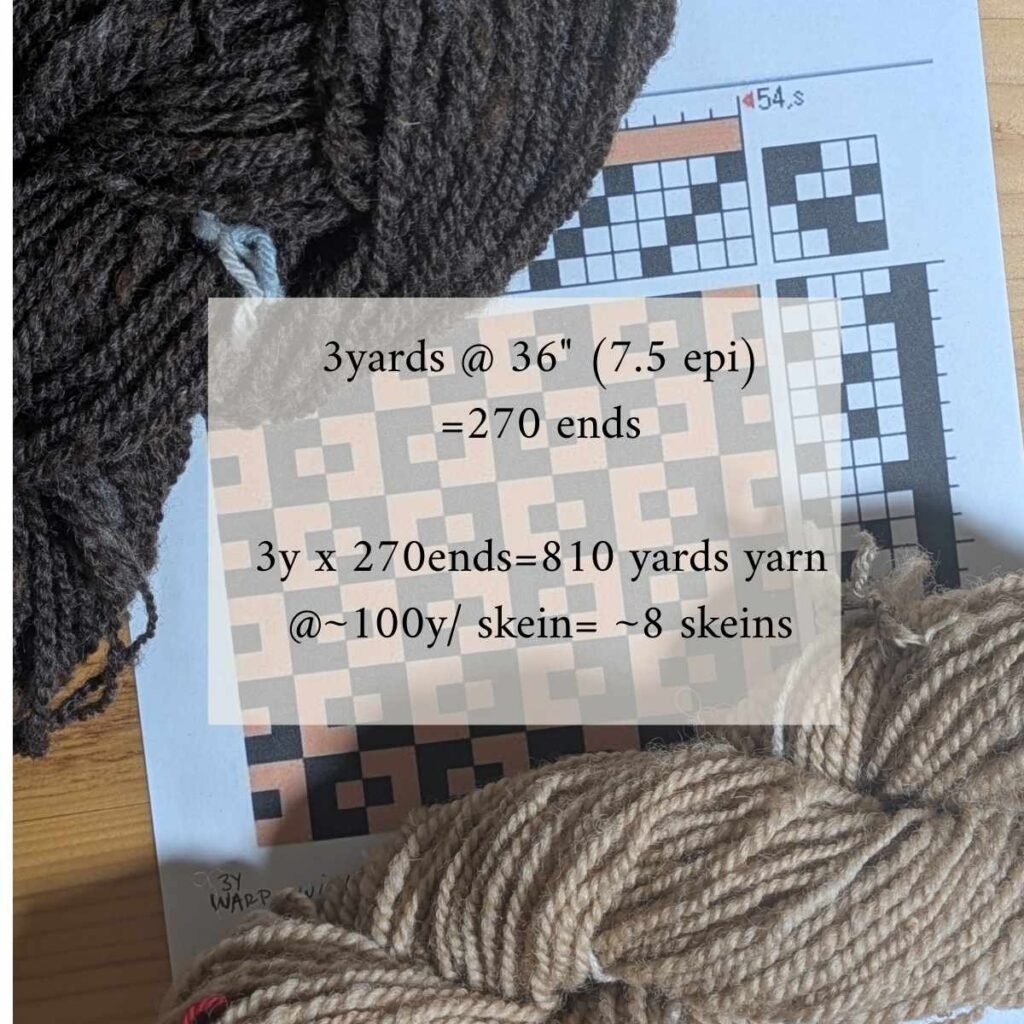
The next step is to figure out how much yarn I’ll need of each color- I did this by deciding how many yards I wanted to weave total, and how wide I wanted my cloth to be. With a little math (check out the image if you want to nerd out), I came up with 8 skeins of each color (coffee for warp, natural dark for the weft.)
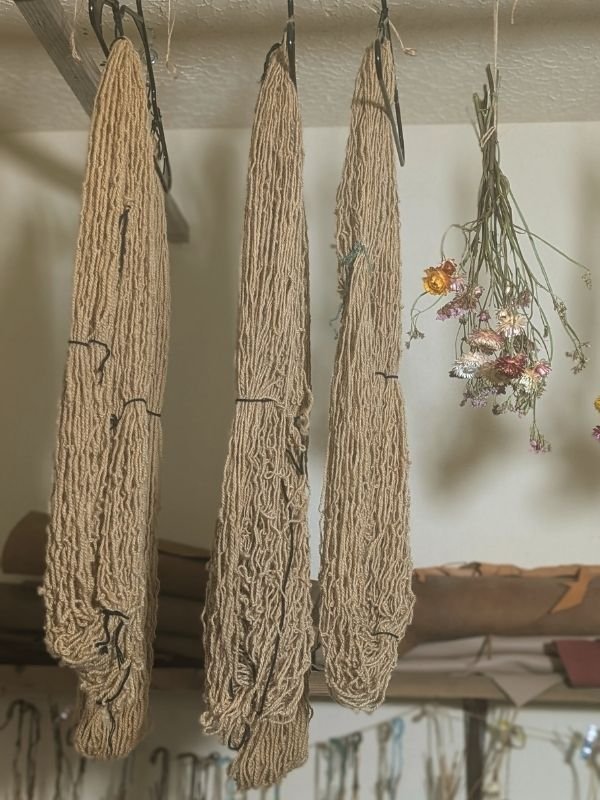
I needed to spin 8 of skeins of dark wool for the weft, and I had a bunch of white wool already spun, so all I needed to do was dye that, and then I could get to warping the loom.
follow along
Next up is warping the loom and starting to see whether this color story holds once it becomes cloth. Sometimes the idea works. Sometimes it changes completely once weaving begins.
Either way, this is where the story starts.
This post kicks off the Wool → Yarn → Cloth series, where I’m sharing the full process of turning fiber into fabric — I’d love to have you along on the journey!