Buying Your First Spinning Wheel: What I’d Look For as a Beginner
If you’re new to spinning, choosing a first spinning wheel can feel overwhelming fast.
Everyone has opinions, and those opinions are often tied to specific brands, styles, or what someone learned on years ago.
Instead of telling you which wheel to buy, I want to share what I would look for if I were starting over as a beginner — and why those things matter more than brand names or aesthetics.
There’s no single “perfect” beginner wheel. You can absolutely learn on any wheel you have, but there are a few features that can make learning to spin feel calmer, clearer, and a lot more enjoyable.
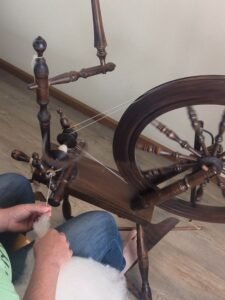
What Matters More Than A Brand- Features that make learning to spin more enjoyable
1. A slower ratio to start — with room to grow
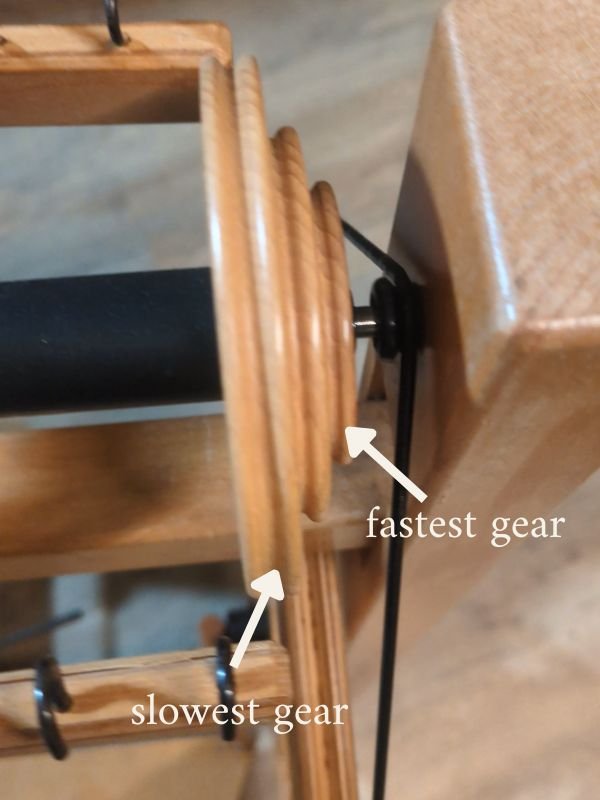
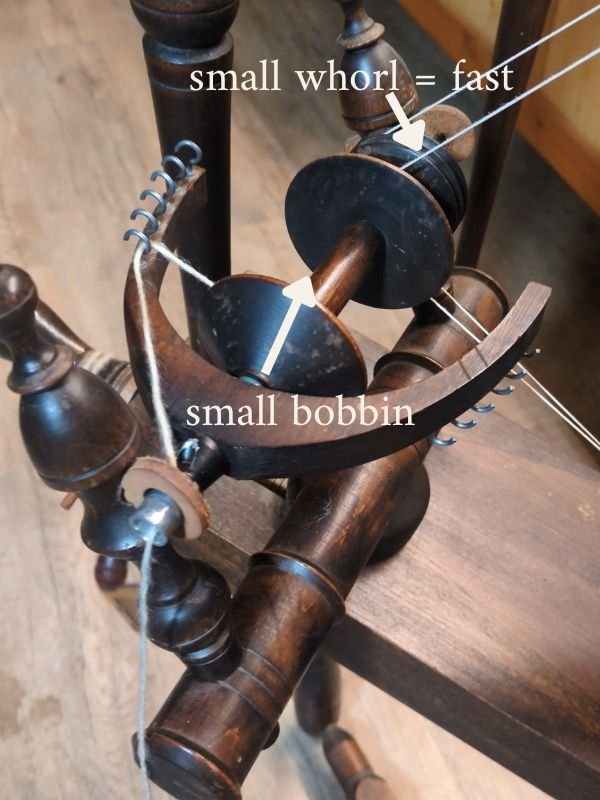
One of the biggest things I’d want in a beginner wheel is a slower gear ratio (this means a smaller difference between the big wheel (flywheel) and little gear (whorl) that the drive band is connected to), with the option to go faster later on- to start, look for a bigger whorl.
When you’re learning to spin, everything is new at once:
your hands, your feet, the fiber, the twist, the take-up. A very fast wheel can feel like it’s running away from you before you’ve had a chance to understand what’s happening.
A slower ratio gives you time to:
- Coordinate your hands and feet
- Feel how twist enters the fiber
- Make adjustments without panic
Once those basics click, having the option to spin faster is wonderful — but it’s something you grow into, not something you need on day one.
2. The ability to ply on the same wheel
This is a big one, and it’s often overlooked by beginners.
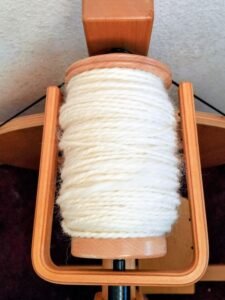
If I were buying my first wheel, I’d absolutely want to be able to ply on the same wheel I’m spinning on —So, ideally, the wheel has a larger bobbin.
Plying is part of spinning. Even if you think you will only spin singles, you will inevitably want to make a plyed yarn someday. And learning to ply is much easier when:
- You’re not juggling extra equipment or a tiny bobbin
- You have room on the bobbin to hold the thicker plyed yarn
- You have one wheel that can handle both spinning and plying
A wheel that handles both spinning and plying well keeps the learning curve gentler and the process less fragmented.
3. Comfortable, steady treadling
A beginner wheel should feel comfortable to treadle and easy to keep moving in one direction.
If a wheel is hard to treadle, or constantly wants to reverse direction, it adds mental and physical fatigue — especially early on, when you’re already concentrating hard.
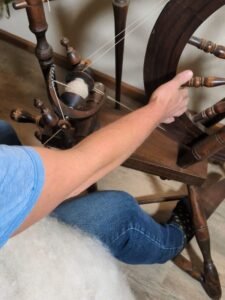
Learning to spin is about rhythm and flow. A wheel that feels calm and cooperative makes a huge difference. If you can’t try out the wheel before you buy it, things to look for that may make treadling more difficult are:
- Very large or heavy flywheels
Bigger flywheels have more inertia. Once moving, they spin beautifully — but getting them started and keeping them going can take more effort, especially for beginners. - High default gear ratios (small whorl)
Wheels set up primarily for speed can feel demanding to treadle. Faster ratios require more consistent foot rhythm and can be harder to learn on
4. Cost, portability, and used wheels
Cost and portability matter — especially for beginners.
You don’t need the most expensive or elaborate wheel to learn to spin well. In fact, buying a used wheel can be a fantastic way to start:
- lower financial pressure
- less fear of “getting the wrong wheel”
- room to upgrade later once you know what you like
Portability can also be a big plus if you spin in different spaces or like to bring your wheel along- there are wheels specifically made for portability and ones that are small enough and sturdy enough to be quite portable, even though they may not be marketed as “travel wheels.” If you plan to do a lot of traveling with your wheel, an antique wheel may not be the best choice- they tend to be more fragile!
A Real Example: Why One Wheel Was Easier to Learn On Than Another
I’m not sharing this to recommend a specific wheel — just to explain how different tools might be better at different stages of learning to spin.
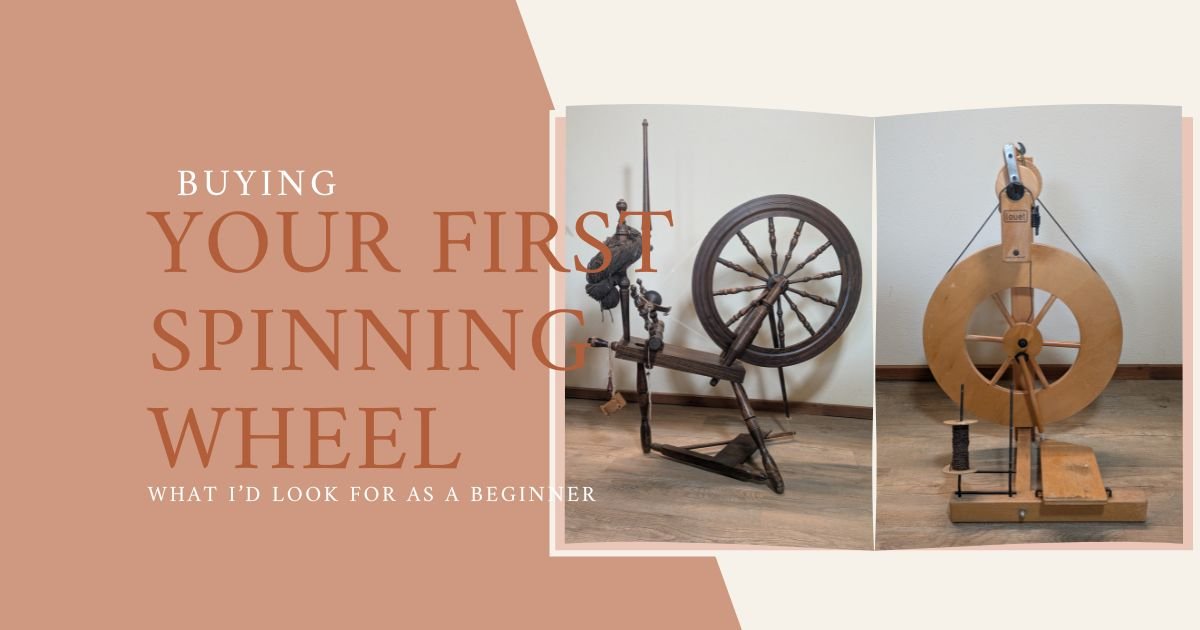
My Louet S10:
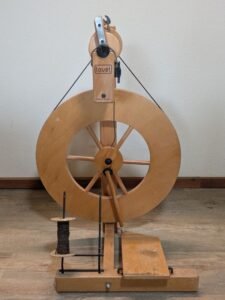
One of my wheels is a Louet S10. It’s an older wheel that I bought used, and boy, have I abused it. Over time, I’ve upgraded it with a newer bobbin that offers multiple ratios, making it versatile enough for most spinning projects. I think it’s a great option for a beginner wheel.
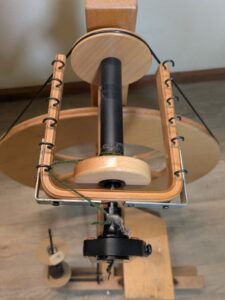
Why it worked well for learning:
- It has a large bobbin, which makes plying much easier
- It’s fairly portable, virtually indestructible
- The gear ratio started slow, but had room to grow as my skills did
- It was affordable and low-pressure to learn on
My Country Craftsman flax wheel:
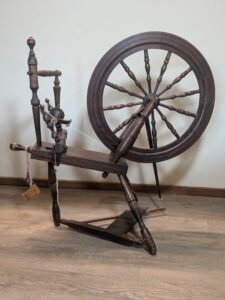
It’s designed for spinning fine yarns and has:
- a smaller bobbin
- a faster, but more specialized setup
- treadling that requires more time to get the hang of
It’s a beautiful tool, but it’s much less forgiving if you’re just starting out. That doesn’t make it “bad for beginners” — it just makes it more specialized. Could you learn on a wheel like this? Yes! Would it be more difficult? Probably.
A Good Beginner Wheel Should Make Learning Feel Calmer
A good beginner wheel should make learning feel calmer, not harder.
If you’re constantly fighting the wheel, wondering what you’re doing wrong, or feeling tense every time you sit down to spin — that’s information, not failure.
Often, it’s not about talent or effort. It’s about matching the tool to the learning stage.
I shared my thoughts on what to look for in a beginner spinning wheel in a recent reel — you can watch it here.
What about e-spinners? Are they good for beginners?
E-spinners can be a great option for some beginners — especially if:
- You have limited space
- You prefer not to treadle
- You want something very portable
They remove the foot-pedal learning curve, which can make it easier to focus on drafting and twist.
That said, e-spinners also come with their own learning curve. You’re managing speed with a dial instead of your feet, and that takes a different kind of coordination. Some beginners find that intuitive; others miss the rhythm that treadling provides. I find spinning more enjoyable on a wheel, but plying on an e-spinner can be so fast! An e-spinner can be yet another tool to add to your arsenal when you are truly bitten by the spinning bug.
Like wheels, there’s no single right answer. The best choice depends on how you like to learn and what feels most comfortable to your body.
Beginner Spinning Wheel FAQ:
What’s the beginner spinning wheel?
There truly isn’t one perfect wheel for everyone. Bodies, budgets, fiber preferences, and learning styles all differ. What matters most is choosing a wheel that makes learning feel steady and approachable, rather than overwhelming.
Should I buy a new wheel or a used one?
Buying a used wheel can be a great option for beginners. It often lowers the financial pressure and lets you learn what you actually like before investing more. Many wheels are very durable and hold their value well.
Do I need multiple gear ratios as a beginner?
You don’t need a lot of ratios to start, but having at least one slower ratio is very helpful. A wheel that also offers faster ratios later gives you room to grow without needing to upgrade right away, so it’s a great option.
What’s the difference between a “fast” wheel and a beginner-friendly one?
Fast wheels deliver a lot of twist very quickly. That can be wonderful for fine yarns and experienced spinners, but it can feel like the wheel is running ahead of you when you’re learning. Beginner-friendly wheels tend to be slower, steadier, and more forgiving.
Why does plying matter when choosing a wheel?
Plying is part of spinning — it’s how singles become yarn. A wheel that can comfortably handle plying, especially with a larger bobbin, makes the full process easier and more enjoyable from the start.
Does portability really matter?
It can. If you move your wheel between rooms, spin in different places, or like to bring it along to spin-ins or classes, portability can make spinning feel more accessible and fun!
What if I choose the “wrong” wheel?
There’s no permanent wrong choice. Spinning skills transfer well between wheels, and many spinners change or add wheels over time as their interests evolve. Learning on a wheel that feels calm and cooperative is far more important than choosing the “perfect” model.
Is it okay to start on a wheel instead of a spindle?
Absolutely. Some people love starting with spindles, others do better jumping straight to a wheel. There’s no hierarchy — just different paths into the craft.
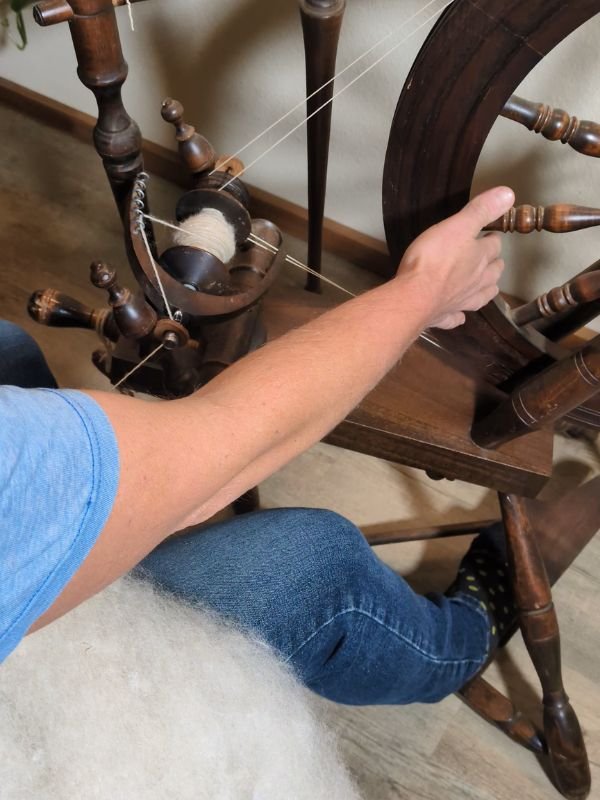
Just Getting Started with Spinning?
I’m working on a beginner spinning course, starting with the very first minutes at the wheel.
If you’d like updates or early access when it launches, you can join the waitlist here.