
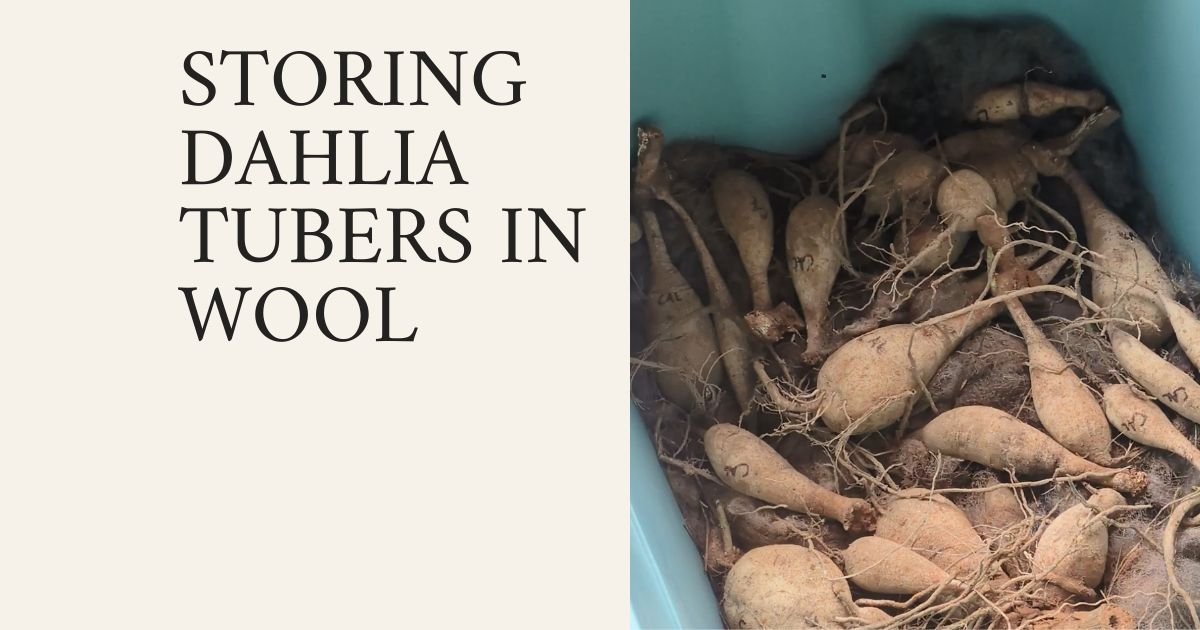
How to Store Dahlia Tubers for Winter: A Wool Storage Experiment
Every fall, once the first frost hits and the dahlias come down, the same question comes up: how do you store dahlia tubers for winter so they survive until spring?
There are a lot of recommended methods out there — peat moss, wood shavings, paper bags, plastic wrap — and I’ve tried several of them over the years. Sometimes they work well. Other times, I open a box in spring and find shriveled tubers, rot, or mold. For our 8b growing zone, my favorite method so far is to leave the tubers in the ground covered with hay and plastic over the winter, then divide and replant in the spring- but this becomes almost impossible on a large scale, or if you are selling tubers and need to count your tubers for winter pre-sales.
So, on the quest for the perfect storage method, this year I decided to try something different: storing dahlia tubers in wool.
Specifically, waste wool that we already have on the farm.
This is an experiment, not a claim that this is the “best” method — but it made enough sense for our farm that it felt worth trying.
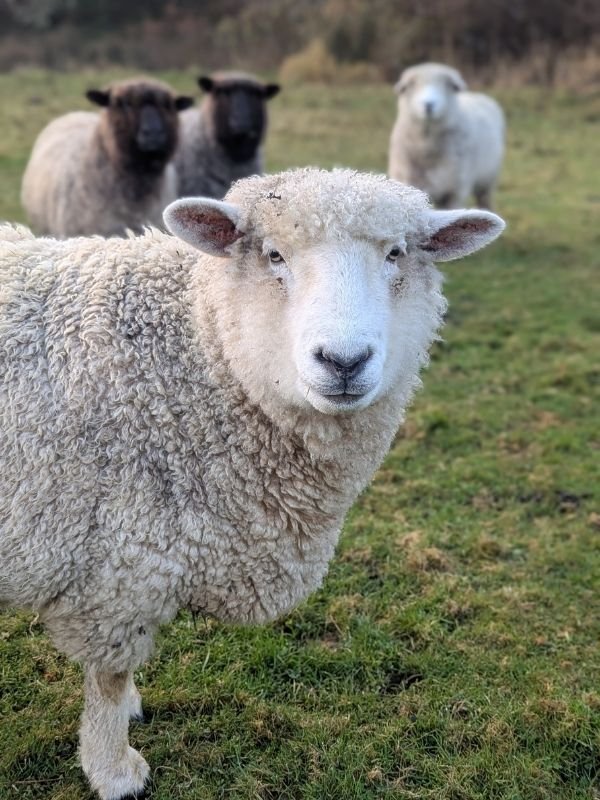
Why Use Wool to Store Dahlia Tubers?
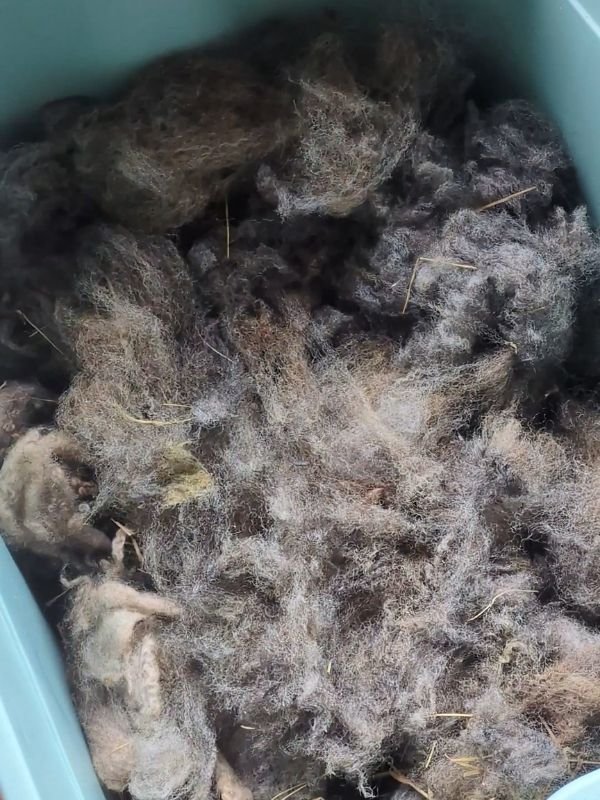
We raise sheep, which means we always have some amount of wool that isn’t usable for spinning or selling. This is low-grade, waste wool — short, dirty, uneven — the kind that usually ends up:
- In the compost pile
- Used as mulch in the garden
- Or tossed out
Even though it’s not pretty, it still has the same basic properties as any wool. That’s what got me thinking about using it for dahlia storage.
Wool:
- Breathes instead of sealing moisture in
- Insulates against temperature swings
- Helps buffer humidity rather than drying things out completely
- Doesn’t compact tightly around tubers
Dahlia tubers don’t want to be wet, but they also don’t want to dry out completely. Wool seemed like it might help strike that balance — especially in our fairly humid coastal climate.
And since this wool is already a byproduct of the farm, I didn’t need to buy anything new.
How I’m Storing Dahlia Tubers in Wool
This is my current setup. It’s simple and very low-tech.
I’m using waste wool only — nothing clean or spinnable.
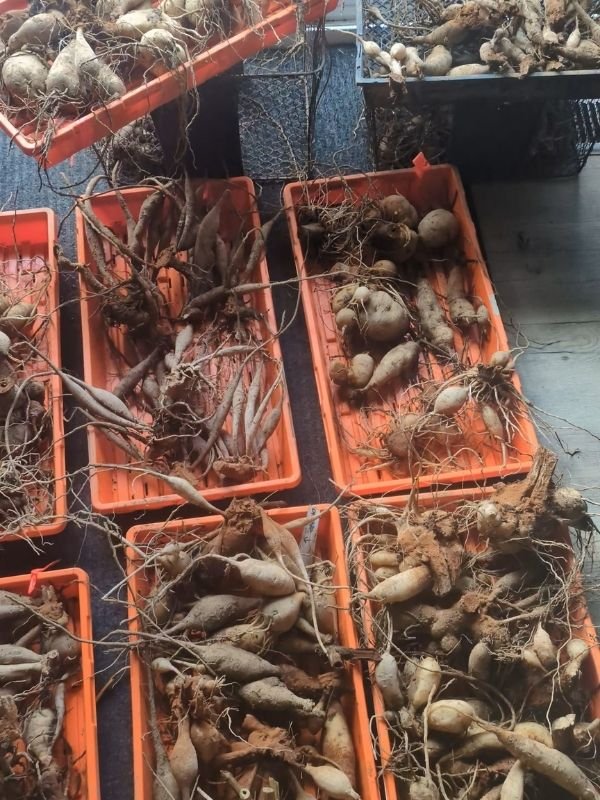
1. Digging and curing
After frost, I dug the tubers, divided them, and let them cure just long enough for the skins to firm up. They’re dry to the touch, but not overly dry.
2. Minimal cleaning
I knocked off excess soil but didn’t scrub them clean. I’m more concerned about trapped moisture than a little dirt.
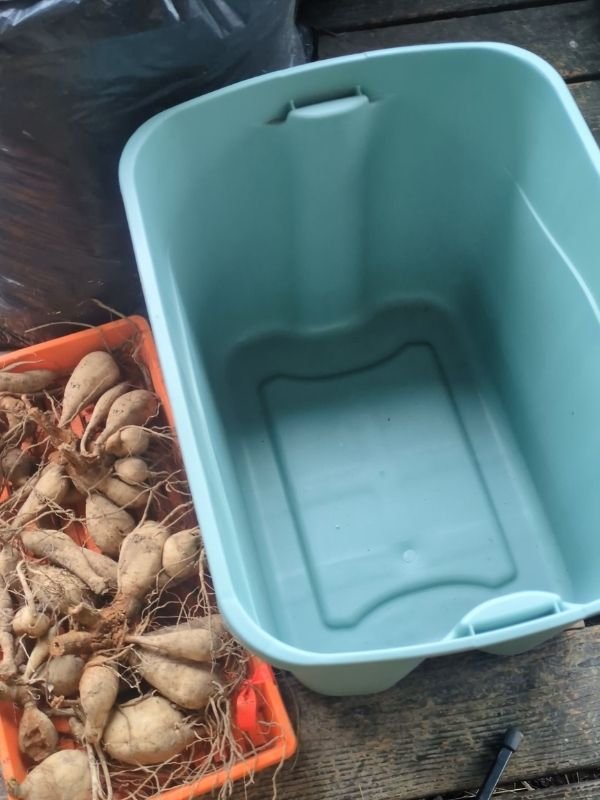
3. Layering tubers with wool
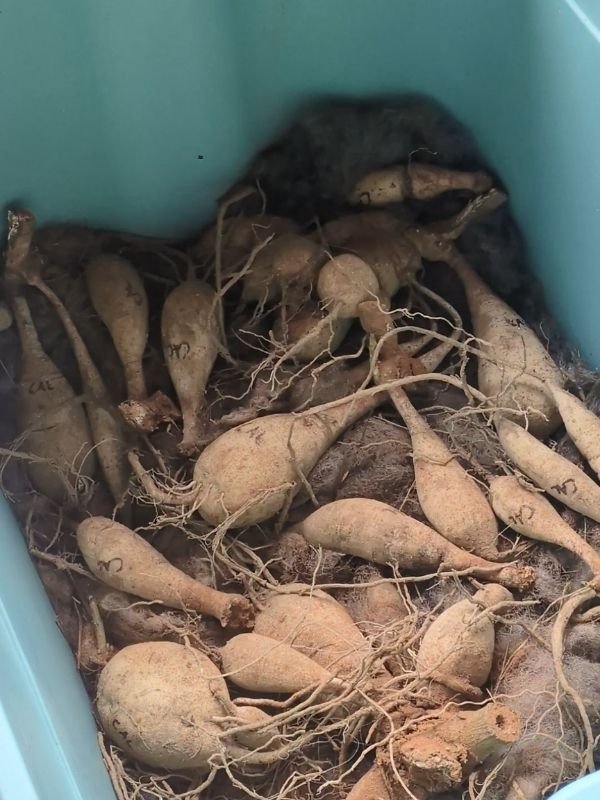
In plastic storage bins, I added:
- A loose layer of wool on the bottom
- Tubers spaced so they aren’t touching
- More wool was tucked gently around and between them
- Repeated for 2-3 layers
The goal is separation and airflow, not compression.
4. Labeling and storage location
Each bin is labeled and stored in a cool, dark place where temperatures stay above freezing, in our situation, that’s an insulated room in an unheated garage- so there will still be temperature fluctuation, and I may need to cover them on very cold nights
Watch the whole process here:
What I’ll Be Watching Over Winter
Since this is an experiment, I’ll be checking on the tubers occasionally and paying attention to:
- Signs of rot or mold
- Excessive shriveling
- Condensation inside the bins
- Early sprouting during mild weather
Is Wool the Best Way to Store Dahlia Tubers?
Only time will tell- I have a digital thermometer inside one of the bins, and so far it seems like the wool is keeping the temperature relatively stable, and on very cold nights it is above freezing. So far, it’s promising!
This method may work especially well for:
- Small-scale growers
- Humid or variable winter climates
- Anyone who already has access to wool or similar natural fibers
Final Thoughts
Storing dahlia tubers is always a bit of a balancing act. This wool storage experiment felt like a practical way to use something we already have and give it another job before it eventually heads back to the garden as mulch.
If it works well, great. If not, the wool still goes back into the soil — and I’ll have learned something useful for next year.
I’ll share an update once spring rolls around and the tubers come out of storage!
Common dahlia storage questions (applies to any storage medium)
Common Questions (FAQ)
What’s the best temperature to store dahlia tubers?
Dahlia tubers store best at around 40–50°F. The goal is to keep them cool enough to stay dormant, but above freezing. Large temperature swings are harder on tubers than a steady, slightly imperfect temperature, so consistency matters more than hitting an exact number.
Should dahlia tubers touch during storage?
Ideally, no. I try to space tubers so they aren’t touching, especially the necks. This helps limit the spread of rot if one tuber starts to go bad. Try your best to keep them gently separated without packing them tightly.
How often should I check dahlia tubers in winter?
You don’t need to check them constantly. I plan to look in on mine every 4–6 weeks, just to make sure:
- Nothing is rotting
- Tubers aren’t drying out excessively
- There’s no condensation building up
What if dahlia tubers start sprouting in storage?
Early sprouting can happen, especially in mild winters or if storage temperatures creep up. If sprouts are small, I usually leave them alone and keep monitoring. If growth really takes off, that’s a sign the tubers may need cooler storage or, in some cases, an earlier wake-up- perfect if you want to take cuttings and multiply your tubers!